
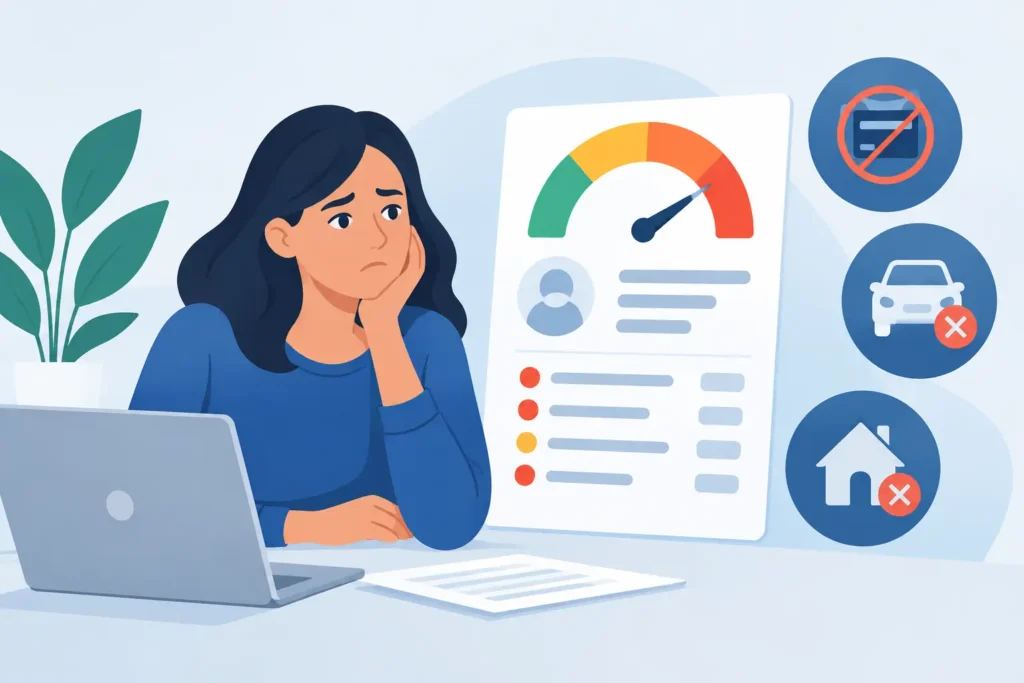
When repayments are no longer manageable, the fear of damaging your credit report can keep you silent for far too long. But hardship credit reporting should not stop you from asking for help. A hardship arrangement may be a far better outcome than falling further behind while trying to hold everything together on your own.
For many Australians, financial hardship starts with one change that was not in the plan: reduced hours, illness, a relationship breakdown, rising business costs, a tenant leaving, or interest rate increases that make a home loan impossible to carry. The bills keep arriving, calls from creditors become more frequent, and sleep becomes harder to find.
The practical step is to understand what may be recorded, what it means for future borrowing, and how to deal with a lender before the situation worsens.
What is hardship credit reporting?
A financial hardship arrangement is an agreement between you and a credit provider to change the way you repay a credit contract because you cannot meet the original terms. This could involve reduced repayments for a period, a payment pause, an extended loan term, or another variation that gives you breathing room.
Under Australia’s comprehensive credit reporting system, some credit providers can report that a financial hardship arrangement is in place. This is known as financial hardship information. It does not disclose the personal reason for your hardship. Your report should not say that you were ill, lost work, separated from a partner, or had a business downturn.
Instead, the reporting is intended to show that the original repayment arrangement was changed due to financial hardship. It can also indicate whether the arrangement is temporary or more permanent in nature.
That distinction matters. A lender considering a new application wants to understand whether your finances have stabilised and whether a new repayment would be affordable. Hardship information can form part of that assessment, alongside your income, expenses, existing debts, repayment history and overall financial position.
How hardship credit reporting may affect future lending
There is no single answer because each lender has its own credit policy and considers each application differently. A hardship arrangement is not an automatic rejection for every future loan. It is also not the same thing as a default, bankruptcy or court judgment.
However, it may affect how a lender views an application while the arrangement is recent or still active. You may find that refinancing, applying for a new credit card, increasing a limit, or seeking finance for a vehicle is more difficult until you have demonstrated a period of stable repayments and improved cash flow.
Financial hardship information is generally held on a credit report for 12 months. Repayment history information, where applicable, and other information on your file can have different retention periods. A default, for example, is a separate and more serious entry with its own reporting rules. This is why taking action early can be so valuable.
If you have agreed to a hardship arrangement, do everything you reasonably can to meet its new terms. A workable agreement can help prevent the debt from escalating. An arrangement that is unrealistic from the first payment does not solve the underlying problem – it simply delays the pressure.
Hardship support is not the same as ignoring the debt
It is understandable to avoid opening emails or answering the mobile when you are overwhelmed. Yet silence can narrow your options. Creditors may not know you are experiencing hardship, and missed repayments can continue to build while you hope next month will somehow look better.
Asking for hardship assistance is a formal step. You are telling the lender that the current repayment is not sustainable and that you need an arrangement based on your actual circumstances. In most cases, the lender will ask for information about your income, essential living costs, assets, liabilities and the cause of hardship.
Be honest and specific. If the issue is short-term, such as a temporary loss of work, explain what is expected to change and when. If the problem is ongoing, such as a permanent reduction in income or a business that cannot support its current debt, a short payment holiday may not be enough.
This is where many people get stuck. They accept a reduced payment that feels like a win in the moment, only to discover they still cannot afford it once the mortgage, groceries, school costs, fuel, insurance and other debts are counted properly. A sustainable plan has to deal with the whole picture, not just the loudest creditor.
Before you agree to a hardship arrangement
Ask the lender to clearly explain the proposed arrangement in writing. You need to know the new repayment amount, start and end dates, whether interest will continue to accrue, how the loan term may change, and what will happen when the arrangement ends.
It is also reasonable to ask how the arrangement will be reported to credit reporting bodies and whether your existing repayment history will be affected. Keep copies of every email, letter, application and agreed payment schedule. If you speak by phone, write down the date, the person’s name and what was agreed.
Do not commit to a payment simply because you feel pressured to give an answer on the call. Take the time to compare it with your real budget. A payment arrangement should leave enough for essential living costs. It should not rely on using another credit card, selling household necessities, or skipping bills that will create another crisis next week.
For people with several debts, the order of decisions matters. Protecting a home loan, business asset, essential vehicle or other critical asset may require a different strategy from dealing with unsecured credit cards or personal loans. There is no one-size-fits-all hardship application.
Check your credit report for accuracy
You have the right to check the information recorded about you. If hardship information, repayment history, a default, account balance or personal details are incorrect, raise the issue with the credit provider that supplied the information. You can also contact the relevant credit reporting body.
Errors do happen, particularly where an arrangement was agreed but the account was not updated correctly. A lender should investigate a correction request and respond through its complaint process. Keep your evidence organised, including written confirmation of the hardship arrangement and proof of payments made under it.
If a dispute is not resolved, you may be able to take it to the lender’s external dispute resolution scheme. The key is to act promptly rather than assuming an entry cannot be challenged.
When a hardship arrangement may not be enough
A hardship variation can be helpful when your financial pressure is temporary and the debt will become affordable again. But it may not be enough where arrears are substantial, several creditors are demanding payment, property values have fallen, or income has changed for the long term.
In those situations, you may need a broader debt-resolution strategy. That could involve negotiating with multiple creditors, restructuring repayment arrangements, considering the sale of an asset in a controlled way, or assessing alternatives to bankruptcy. The right path depends on your debts, assets, household income, business position and what you need to protect.
You do not need to wait for a default notice, legal action or a repossession threat before getting clear advice. The earlier the position is assessed, the more options may be available.
Debt Australia can review your full financial position and negotiate directly with lenders and creditors where appropriate. As an Australian Credit Licence holder, the focus is on a practical plan that addresses the pressure you are facing, rather than a quick promise that leaves the real problem untouched.
A hardship arrangement is not a reason for shame. It is a sign that you have recognised the debt is no longer working and chosen to deal with it. Take a breath, gather the facts, and make the next call before the debt decides the next step for you.