
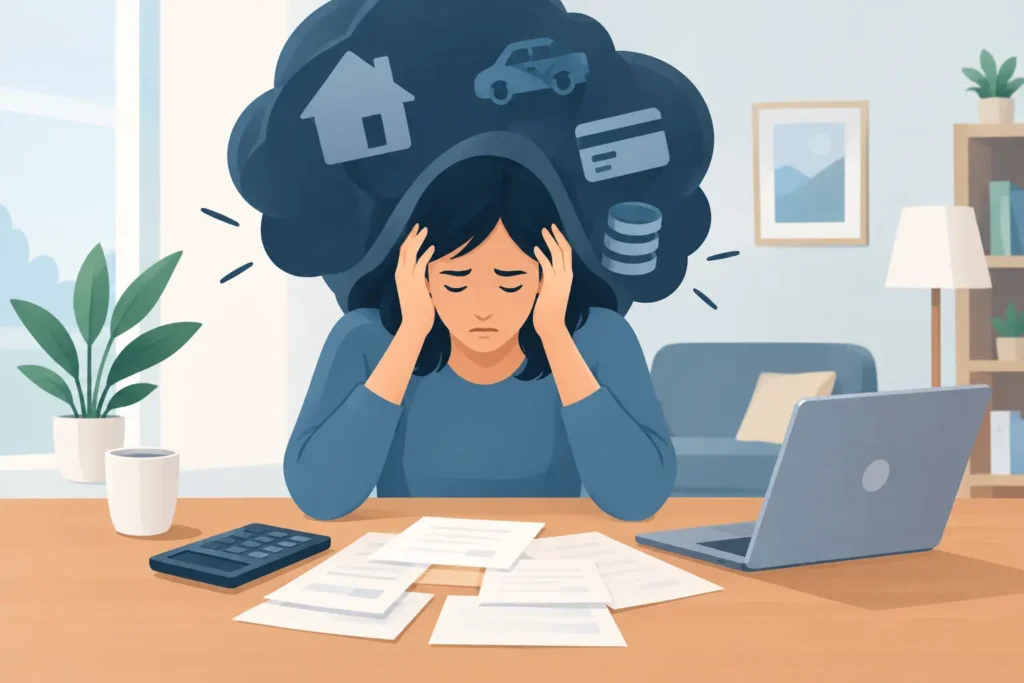
The moment household debt becomes unmanageable is rarely dramatic at first. It might be a credit card balance that no longer drops, a home loan repayment that rises again, or using one account to cover another until payday. Then the calls, reminders and restless nights begin. If that feels familiar, take a breath: financial hardship is not a personal failure, and there may be more options than you have been told.
For many Australians, debt pressure builds after a change in circumstances rather than reckless spending. A rate rise, reduced shifts, illness, separation, a business slowdown or a vacant investment property can change a once-manageable budget very quickly. The key is to act while there is still room to negotiate.
What household debt really means
Household debt is the money owed by people and families, usually through home loans, investment-property loans, credit cards, personal loans, car finance, buy now pay later accounts and overdue bills. Debt itself is not automatically a problem. A mortgage can help you buy a home, and business finance may support growth. The problem starts when repayments take more from your income than your household can reliably afford.
That gap can be hidden for a while. Savings are used up. Credit limits are increased. Tax refunds or bonuses are spoken for before they arrive. Some people refinance repeatedly, hoping one lower repayment will fix everything. In the right circumstances, refinancing can help. But if it merely shifts the pressure forward, adds fees or extends debt without addressing the cause, it can leave you in a weaker position.
The most useful question is not, “How much debt do I have?” It is, “Can we meet our repayments and essential living costs without borrowing more, selling assets in a rush or falling behind again next month?”
Warning signs your debt needs attention
You do not need to wait for a default notice to ask for help. In fact, early action generally gives you more choices and more time to make sound decisions.
Warning signs include paying only the minimum on credit cards, regularly missing direct debits, receiving hardship or collection notices, using credit for groceries and utilities, or falling behind on council rates, strata levies or tax obligations. For property owners and business borrowers, a more serious sign is relying on short-term finance to meet mortgage repayments or using one property’s income to prop up another.
The emotional signs matter too. Avoiding calls, hiding statements from your partner, losing sleep, feeling sick when your mobile rings, or being unable to look at the bank balance are signals that the situation deserves proper attention. Shame keeps many people quiet long after a practical solution could have been explored.
Why a quick fix can make debt worse
When pressure is high, any offer that promises instant relief can sound tempting. Debt consolidation, refinancing, selling an asset, drawing on superannuation, borrowing from family or accepting a settlement offer may each have a place. None should be treated as an automatic answer.
A consolidation loan, for example, might lower your monthly repayment but increase the total interest paid if the term is much longer. Securing previously unsecured debts against your home can put an important asset at greater risk. Selling a property may reduce debt, but a rushed sale can create a shortfall if the sale price does not cover the loan, selling costs and arrears.
Likewise, ignoring creditors is rarely a strategy. Lenders may have hardship processes and may consider temporary payment arrangements, interest changes, term extensions or other relief, depending on your circumstances. But they need clear information, and arrangements must be realistic. Agreeing to an amount you cannot maintain usually delays the problem rather than resolving it.
Start with the full picture, not one bill
Debt pressure can feel like a pile of separate emergencies. The way through is to turn it into one clear financial picture. Gather the current balances, repayments, interest rates, arrears, security held over assets and any collection or legal notices. Add household income, business income where relevant, regular living costs and assets.
This exercise can be confronting, but accuracy matters. A plan built around an optimistic estimate of income or an unrealistically tight grocery budget will not last. Include irregular costs too: insurance, school expenses, car registration, medical bills, maintenance and seasonal business expenses all affect what you can genuinely pay.
Then separate debts by urgency. A home loan in arrears, a secured car loan needed for work, a statutory demand, an overdue tax debt or a matter already in legal action may need immediate attention. Credit cards and personal loans still matter, but the best order of action depends on your individual position. There is no one-size-fits-all debt checklist.
Protect essential stability first
Your first priorities are usually safe housing, food, utilities, transport needed for work and medical needs. That does not mean other creditors should be ignored. It means decisions should be made with a clear view of what your household needs to remain stable.
For homeowners, communicating early about mortgage hardship can be particularly important. If you have investment properties or complex lending across personal and business entities, the position can be more complicated than it appears from a single loan statement. Cross-collateralisation, guarantees and security arrangements can affect which assets are exposed and what options are available.
Keep a record of every conversation
Write down who you spoke to, the date, what was discussed and any agreement made. Ask for arrangements in writing. Do not hand over money, sign a variation or agree to sell an asset simply because you feel cornered during a call. Take the time needed to understand the consequences.
If a creditor proposes a settlement, check whether it settles the entire balance, how it will be recorded, whether any guarantor remains liable and whether there could be tax or other implications. Detail matters when debt is complex.
When professional negotiation can help
Some households can work directly with creditors using a realistic budget and a clear hardship request. Others need more support, particularly where there are multiple lenders, mortgage arrears, business debts, property loans, guarantees or threatened legal action.
A regulated debt-management provider can assess the full situation, explain realistic pathways and negotiate with creditors on your behalf. The goal is not to make empty promises or simply push debt away. It is to establish a workable strategy that reflects your income, assets, obligations and the outcome you are trying to protect.
That might involve negotiating repayment arrangements, seeking hardship assistance, restructuring debts, dealing with a mortgage shortfall, pursuing a negotiated settlement or considering asset-sale options in an orderly way. Bankruptcy can be appropriate in some circumstances, but it is not the only path and should not be treated as the default before alternatives are properly assessed.
Debt Australia provides regulated debt-management services under Australian Credit Licence 532513 and works with clients through assessment, creditor negotiation and resolution. For people carrying the weight of several debts, having someone who understands lender processes and can put the full case forward can make the next step feel far less daunting.
Give yourself permission to act early
The hardest part is often opening the statements and saying out loud that the current arrangement is not working. Yet early action can protect options, reduce avoidable costs and stop a difficult situation from becoming a crisis.
You do not have to solve every debt today. Start by getting the facts together, protecting your essentials and seeking clear advice before making a major decision. A calm, workable plan is far more valuable than another month spent hoping the pressure will somehow disappear. Say g’day to the right support, ask direct questions, and give your household the chance to breathe easy again.