
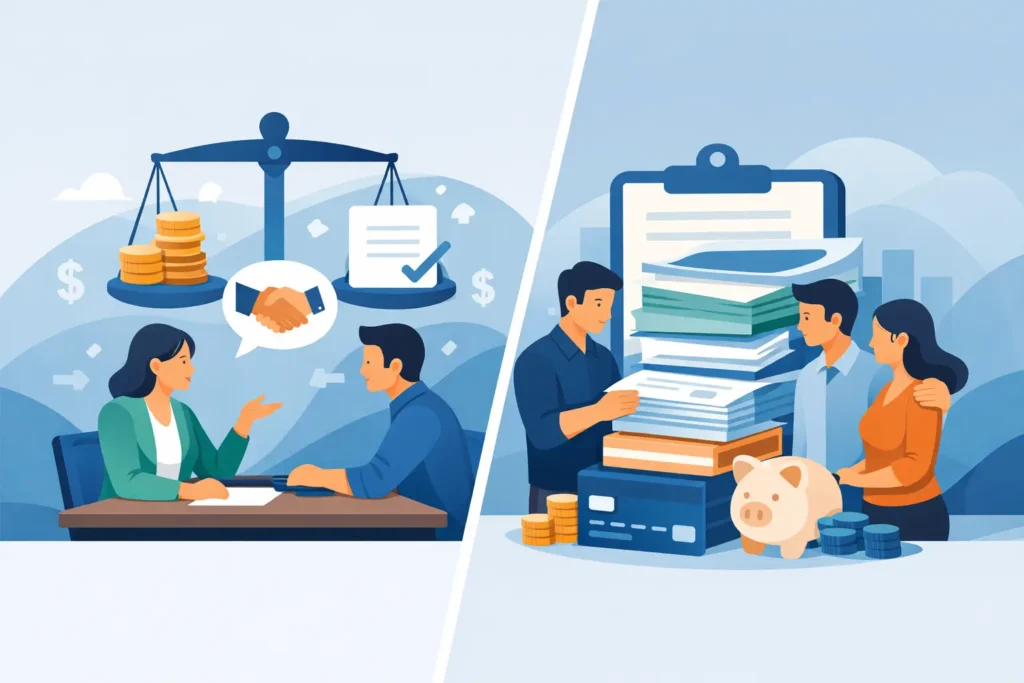
The call from the lender, the overdue notice in the letterbox, the balance that barely moves despite every repayment – debt pressure can make even simple decisions feel impossible. When weighing up creditor negotiation versus debt consolidation, the right choice depends less on which option sounds easier and more on what your finances can realistically sustain.
For some Australians, one new loan and one repayment can bring order to a messy situation. For others, taking out more credit simply shifts the problem forward, often while putting a home or other assets at greater risk. Creditor negotiation can create breathing room without adding a new loan, but it needs a clear strategy and honest financial information.
What debt consolidation actually does
Debt consolidation means replacing several existing debts with one new loan. That loan is then used to pay out balances such as credit cards, personal loans, car finance or overdue bills. Instead of managing several due dates, interest rates and creditors, you make one repayment to the new lender.
The appeal is obvious. A lower interest rate may reduce your repayments, and a single due date can make your household budget easier to manage. It may work well where your income is steady, your credit profile is still strong enough to qualify for suitable finance, and the underlying issue was high-cost debt rather than an ongoing cash-flow shortfall.
However, consolidation does not erase what you owe. It restructures it. If the new loan runs for a longer term, lower weekly or monthly repayments may still mean paying more interest overall. Fees, early payout charges and loan establishment costs can also affect the true saving.
The biggest concern arises when unsecured debts are consolidated into a loan secured against your home. You may turn credit card debt into a mortgage-related obligation. If life changes again – reduced work, illness, relationship breakdown or a business downturn – the consequences of missed payments can be far more serious.
When consolidation may be worth considering
Consolidation can be a sensible option when the numbers genuinely stack up. You need enough reliable income to meet the new repayment after covering housing, food, transport, utilities, insurance and other essentials. You also need to stop using the cleared credit cards and accounts, or you could end up carrying both the consolidation loan and fresh debt.
Before agreeing to anything, compare the total repayment over the full loan term, not just the advertised interest rate. Ask whether the rate is fixed or variable, whether security is required, and what happens if a repayment is late. A lower monthly figure is not automatically a better outcome.
Creditor negotiation versus debt consolidation: the key difference
The central difference is simple. Debt consolidation creates a new debt to replace old ones. Creditor negotiation works with your existing creditors to seek terms that better reflect your actual financial position.
Negotiation may involve requesting temporary reduced repayments, a payment pause, an interest-rate review, the freezing of interest or fees, a longer repayment period, or a settlement proposal where a lump sum is available. The outcome depends on the creditor, the type of debt, your hardship circumstances, your assets, and the evidence supporting the proposal.
This is not a one-size-fits-all process. A bank may respond differently to a home loan hardship request than a debt collector responds to an old unsecured personal loan. A business owner with seasonal cash flow has different pressures from a family whose income has fallen after an injury. A practical plan needs to account for all of it.
Creditor negotiation is particularly relevant when you cannot afford another loan, your credit history makes consolidation unavailable or expensive, or you need urgent relief from repayments before arrears grow. It can also be appropriate where there are multiple lenders and no single refinancing option will solve the shortfall.
What negotiation can and cannot achieve
A well-prepared proposal gives creditors a clearer picture of what is possible. Rather than making promises you cannot keep, it sets out income, necessary living costs, assets, liabilities and a sustainable repayment capacity. It may also address whether selling an asset, refinancing later or making a lump-sum payment is realistic.
The benefit is that you are dealing with the cause of the pressure: your current repayments do not fit your current circumstances. You are not automatically adding a new loan application, a fresh interest obligation or security over an asset.
That said, creditors are not required to accept every proposal. They may ask for further financial information, make a counter-offer, or take enforcement action if an arrangement cannot be reached. A negotiated arrangement can also affect your credit file or future access to finance, depending on the arrangement and lender reporting. These are reasons to get advice before agreeing to terms you do not fully understand.
Negotiation is also not an excuse to ignore correspondence. The earlier you act, the more options may be available. Leaving calls unanswered and letters unopened can allow arrears, fees and legal risk to build while you lose valuable time.
How to decide which path fits your situation
Start with a budget based on facts, not optimism. Include every debt, the minimum repayment, interest rate, arrears, secured assets and any guarantees you have given. Then calculate your genuine available income after essential living costs. If there is no surplus, a new consolidation repayment is unlikely to be a lasting fix, no matter how attractive the advertisement looks.
Next, consider the nature of the debt. Credit cards and unsecured personal loans may be candidates for consolidation if you qualify for a lower-cost loan and can repay it within a sensible period. But if your debts include mortgage arrears, business facilities, investment property loans, guarantees or a looming property shortfall, the situation is often more complex. Negotiation, asset planning and a tailored resolution strategy may be needed together.
It is also worth asking a hard question: what caused the debt to become unmanageable? If it was a temporary disruption and your income has recovered, consolidation may help simplify your payments. If the problem is ongoing – such as lower business revenue, a long-term health issue, rising living costs or rental vacancy – your repayments need to be reduced or restructured before you take on another commitment.
Watch for these consolidation warning signs
Be cautious if a lender asks you to secure formerly unsecured debt against your family home, or if the loan term is so long that the total interest cost rises sharply. Be equally cautious if the plan only works by assuming overtime, sales income or rental income that is not guaranteed.
Another warning sign is feeling pressured to sign before you understand the comparison. If you cannot clearly explain the total cost, the security involved and the consequences of default, pause. Financial stress can make fast solutions feel necessary, but a poor refinance can be difficult to unwind.
A practical way forward when creditors are already applying pressure
You do not need to decide in isolation while creditors are calling. Gather recent statements, loan contracts, arrears notices, payslips or business financials, bank statements and details of your household expenses. This creates the foundation for a realistic assessment.
Then seek help from someone who can look across the whole position rather than focusing on one debt at a time. A regulated debt-management provider can assess whether hardship arrangements, direct creditor negotiation, refinancing, asset sales, settlement discussions or another pathway offers the best chance of protecting your long-term position.
Debt Australia works with people facing consumer, home loan, property and business debt pressure, negotiating directly with creditors where a workable outcome can be pursued. Its services operate under Australian Credit Licence #532513, with the focus on a practical plan rather than a quick fix that creates another problem.
There is no shame in needing a different arrangement after circumstances change. The useful next step is to face the figures, respond before matters escalate and choose a plan you can live with. A clear conversation now can replace sleepless nights with a path that lets you breathe easier.