
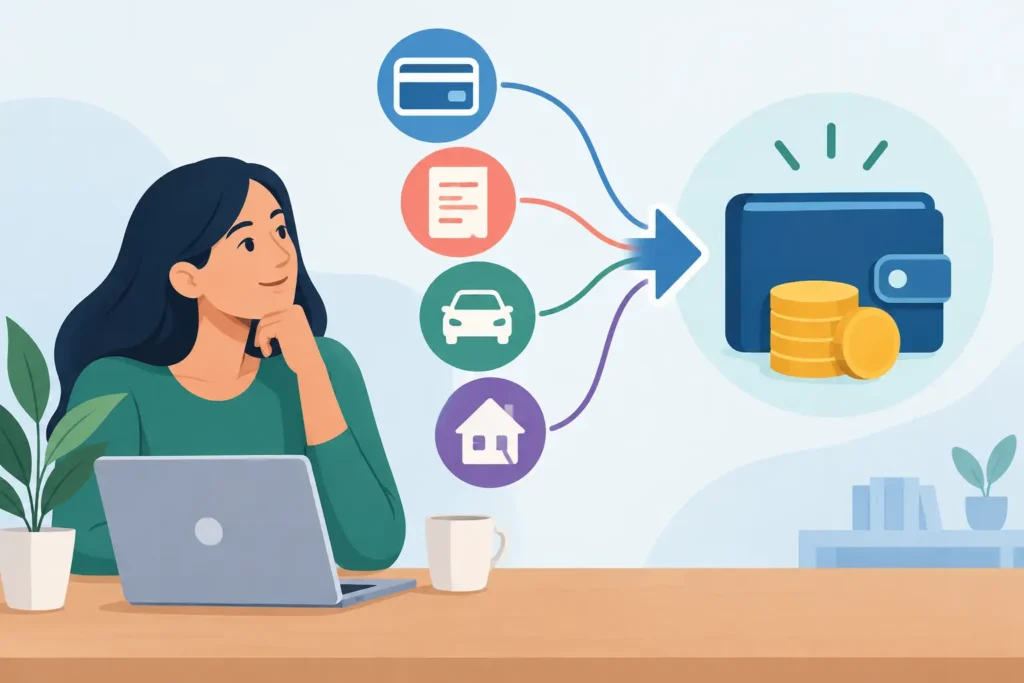
When several repayments are landing on different days, interest is mounting and the mobile rings when you are trying to have dinner with the family, it can feel impossible to get ahead. To consolidate multiple debts means bringing eligible balances into one arrangement, but the right move is not always simply taking out another loan. The aim is to reduce pressure, create a repayment you can genuinely maintain and protect your longer-term position.
For some Australians, consolidation is a useful reset. For others, it can turn short-term stress into a larger, longer debt problem. A clear view of the numbers comes first.
What it means to consolidate multiple debts
Debt consolidation usually means replacing several debts with one new loan or credit facility. For example, you may combine credit card balances, personal loans, store finance and overdue bills into a single personal loan. If you own property, some people refinance their home loan and roll other debts into it.
The obvious appeal is simplicity. Instead of remembering five due dates, five interest rates and five minimum repayments, you have one repayment to manage. A lower interest rate may also reduce the cost of the debt, particularly where high-interest credit cards are involved.
But one payment does not automatically mean a better outcome. The new arrangement needs to be assessed against the total amount repaid, the loan term, fees, security requirements and your household budget. A lower monthly repayment can look like relief while costing considerably more over time if the debt is stretched out for years.
When consolidation may help
Consolidation can be worth considering where your income is stable enough to support a new repayment and the replacement facility improves your position in a measurable way. That might mean a lower rate, fewer fees, a shorter realistic repayment period or a structure that stops balances being shuffled between cards.
It can also help people whose finances have become cluttered after a difficult period – reduced work hours, illness, relationship separation, a business downturn or rising mortgage costs. The problem is not always reckless spending. Plenty of hardworking people end up with several debts because they have been trying to keep everything afloat.
A practical consolidation plan should leave room for ordinary life. Your budget still needs to cover food, utilities, transport, insurance, school costs and unexpected expenses. If the proposed payment only works in a perfect month, it is unlikely to be sustainable.
Compare the full cost, not just the repayment
Before accepting a consolidation offer, compare the total cost of your existing debts with the total amount payable under the new arrangement. Check the interest rate, establishment fees, monthly or annual fees, early repayment charges and the loan term.
Also consider whether the rate is fixed or variable. A variable rate may rise, changing the repayment you were relying on. If the offer includes a promotional rate, find out when it ends and what rate applies afterwards.
It is reasonable to ask direct questions: How much will I repay in total? What happens if I miss a payment? Is my home or another asset being used as security? Can I make extra repayments without penalty? A lender should be able to explain these terms clearly.
The serious risks of rolling debts into your home loan
Using home equity to clear credit cards and personal loans can lower the immediate repayment because home loans generally have lower rates and longer terms. That can provide breathing space when cash flow is under real strain.
The trade-off is significant. Unsecured debt, such as a credit card, may become debt secured against your home. If repayments cannot be maintained, your home is exposed. You may also pay more interest overall by spreading a relatively small short-term balance across a 20- or 30-year mortgage.
Refinancing can still be appropriate in some circumstances, especially where there is a disciplined plan to repay the added balance sooner. It should not be treated as a quick fix without looking closely at the consequences. Clearing cards only to use them again can leave you carrying both fresh card debt and a larger mortgage.
Consolidation is not the only path forward
If your repayments already exceed what you can afford, another loan may not be available or may simply delay the problem. This is where tailored debt resolution can be more useful than a standard consolidation product.
Depending on your circumstances, options may include negotiating reduced repayments, requesting a hardship variation, seeking a temporary pause, refinancing selected facilities, selling an asset in an orderly way or negotiating a settlement on particular debts. Business owners and property investors may need a strategy that considers cash flow, guarantees, secured lending and the value of assets together rather than treating each debt in isolation.
The right option depends on your full financial position. A solution that protects a family home may be unsuitable if it leaves a business debt or tax liability unresolved. Equally, bankruptcy is not the only answer simply because the situation feels overwhelming. There can be stronger alternatives, but they need to be explored early and realistically.
A better way to assess multiple debts
Start by gathering every debt in one place. Include the current balance, interest rate, minimum repayment, arrears amount, due date, security held and whether anyone else has guaranteed the debt. Do not leave out overdue council rates, tax debts, buy now pay later accounts or loans from family. They all affect the pressure you are carrying.
Then list your actual household income and essential spending. Use current figures, not what you hope next month will look like. If your income changes because you are self-employed, work shifts or rely on seasonal trade, build that uncertainty into the assessment.
From there, ask whether consolidation would genuinely improve your position or whether creditors need to be approached for a broader solution. The answer may be different for each debt. A high-interest card balance might be suitable for consolidation, while a mortgage in arrears may require direct negotiation with the lender.
Avoid these common traps
There are a few warning signs that a consolidation offer deserves closer scrutiny. Be cautious if you are encouraged to borrow more than you need, if fees are unclear, if the loan term is far longer than necessary or if the repayment leaves no buffer at all.
Be especially careful about using a new loan to cover ongoing living costs. That may be necessary in a genuine emergency, but it is a sign that the underlying budget issue also needs attention. Borrowing can relieve the immediate strain; it cannot permanently fix an income shortfall on its own.
It also helps to stop new debt from quietly replacing the old. If credit cards are paid out, consider reducing limits or closing accounts where appropriate. The goal is not only to tidy up balances. It is to build a structure that you can live with.
Get someone in your corner before signing
When creditors are calling and deadlines are close, it is easy to accept the first offer that promises lower repayments. Take a breath before committing your home, business assets or future income to a new arrangement.
A regulated debt-management provider can assess the complete picture, explain the practical options and negotiate directly with lenders and creditors where needed. Debt Australia operates under Australian Credit Licence #532513 and works with people facing consumer, mortgage, property and business debt pressure. The focus is on finding a workable path, not judging how you got here.
You do not have to carry the weight of several debts on your own or make a major financial decision while panicked. Say g’day, get the numbers in front of you and give yourself the chance to make the next move with a proper plan behind it.