
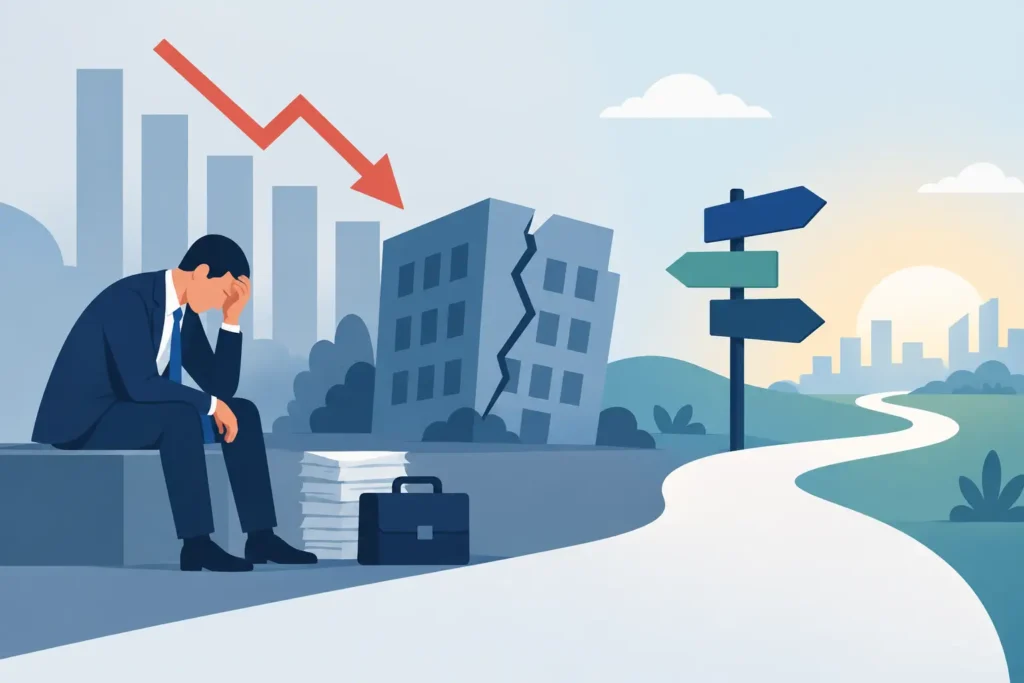
The call from a supplier that you cannot return, the BAS payment you keep moving to the next week, the wages due on Friday when the account is short – this is how business insolvency often begins. It is rarely one dramatic event. More often, it is a slow squeeze that leaves business owners exhausted, embarrassed and unsure which bill to pay first.
If that sounds familiar, take a breath. Financial pressure does not mean you have failed, and it does not automatically mean your business must close. Acting early gives you more room to protect value, negotiate properly and make decisions based on facts rather than panic.
What business insolvency actually means
A business is generally insolvent when it cannot pay its debts as and when they fall due. This is commonly called the cash-flow test. Your business might own equipment, stock, property or have money tied up in unpaid invoices, but still be insolvent if there is not enough available cash or finance to meet current commitments.
For a company, directors have serious duties once insolvency is suspected. Continuing to incur debts that the company cannot repay may expose directors to personal risk. For a sole trader, the distinction is different because the business and the individual are legally the same person. Business debts can directly affect personal assets, household finances and your credit position.
This is why a quick, honest assessment matters. The goal is not to jump straight to liquidation or bankruptcy. The goal is to understand whether the pressure is temporary, whether the debts can be restructured, and whether the business has a viable future with the right intervention.
The warning signs should not be ignored
Most owners know something is wrong before a formal demand arrives. The difficulty is that resilience can turn into denial when you are trying to protect staff, customers and family.
Warning signs can include regularly paying creditors late, relying on credit cards or new borrowing to cover ordinary operating costs, overdue tax obligations, bounced direct debits, supplier accounts placed on hold, or chasing customer payments just to make payroll. A growing ATO balance, repeated requests for payment extensions and using one lender to keep another lender quiet are also signals that cash flow needs urgent attention.
Look beyond the bank balance. Review what is due over the next 30, 60 and 90 days, including wages, superannuation, rent, loan repayments, tax, trade creditors and guarantees. Then compare it with cash already in the bank, realistic incoming payments and finance that is genuinely available. Hope is not a cash-flow forecast.
If the numbers only work when every debtor pays on time, no equipment breaks down and sales immediately lift, the business is in a vulnerable position. That does not mean there is no solution. It means you need one built for the real position, not the best-case scenario.
Protect your options before pressure becomes formal
When creditors are calling, it can feel tempting to avoid them. Silence usually makes matters worse. A creditor who receives no information may escalate to collections, legal action, enforcement or an external administrator far sooner than one who receives a credible proposal.
Start by gathering the full picture: loan statements, credit card balances, leases, tax debt, supplier accounts, overdue invoices, security documents and any personal guarantees. Identify which debts are secured, which are unsecured and which assets may be at risk. A director guarantee on a business loan, equipment finance agreement or trade account can change the stakes significantly.
Next, stop making decisions that create a bigger problem later. Do not transfer assets to family members for less than value, selectively pay related parties, take on debt with no reasonable ability to repay it, or ignore statutory notices. Transactions made while insolvent can be examined and, in some circumstances, reversed. The right advice early is far safer than trying to fix things after the fact.
You should also separate business funds from personal spending and keep records up to date. Clear records help you see the truth, support negotiations and give professional advisers the information needed to act quickly.
Your options depend on whether the business can recover
There is no single answer for every struggling business. A seasonal operator waiting on confirmed contracts has a different path to a business that has been trading at a loss for years. The best option depends on cash flow, assets, debt structure, personal guarantees, tax arrears and whether there is a realistic route back to profitability.
Informal negotiation and repayment arrangements
Where the business remains viable, creditors may agree to reduced payments, a repayment plan, a short-term hardship arrangement, interest relief or a settlement amount. Lenders and suppliers are often more open to a structured proposal when it is supported by accurate financial information and a payment plan the business can actually sustain.
Negotiation is not about making promises to get through this week. It is about presenting a workable position, prioritising urgent risks and creating room for the business to trade without constant crisis management.
Refinancing or selling assets
Refinancing can help where a business has serviceable income, equity or assets but the existing repayments no longer suit its cash flow. However, it is not a cure if it simply shifts debt into a more expensive form without addressing the underlying loss.
Selling a non-essential asset, closing an unprofitable division or collecting overdue accounts may improve liquidity quickly. There are trade-offs. Selling the wrong asset can damage operations, while refinancing secured debt may put more personal property at risk. Decisions should be tested against a realistic forecast, not made solely to stop the next phone call.
Formal restructuring or administration
For eligible companies, formal pathways may include small business restructuring, voluntary administration or liquidation. These processes have strict rules and should be discussed with an appropriately qualified insolvency practitioner and legal adviser.
A formal process can create breathing space, deal with unsecured debts in an orderly way or preserve a viable business in some circumstances. It can also affect control of the company, staff, contracts, creditor rights and director obligations. It is not a decision to make from a late-night internet search.
Directors may also hear about safe harbour protections. These can be relevant where directors are developing and taking a course of action reasonably likely to lead to a better outcome than immediate administration or liquidation. Safe harbour is not automatic, and it comes with conditions. Prompt professional advice is essential.
Personal guarantees need their own plan
Many business owners discover too late that the company structure did not remove all personal exposure. A personal guarantee can allow a lender, landlord or supplier to pursue the guarantor if the company defaults. Property security, joint loans and family assets can make the situation even more stressful.
Do not assume the business solution will automatically resolve the personal debt. Map every guarantee and every security interest, then consider the household budget alongside the business position. A sustainable plan must account for both. Protecting a family home, where possible, requires early and careful work rather than waiting for enforcement action.
Get an independent view while there is still room to move
Business insolvency is not the time to rely only on the loudest creditor or the person who arranged the original loan. You need a clear view of your full debt position, your legal obligations and the options that best protect your future.
Debt Australia can assess complex business and personal debt positions and negotiate directly with lenders and creditors where an informal resolution is appropriate. For formal insolvency appointments or legal advice, the right referral to a qualified practitioner or solicitor matters too. The strongest plan is one that deals with the immediate pressure without pretending the underlying numbers do not exist.
Say g’day for help before the next missed payment becomes a formal demand. A calm, organised response now can give you more choices, more dignity and a better chance to build a financial future you can live with.