
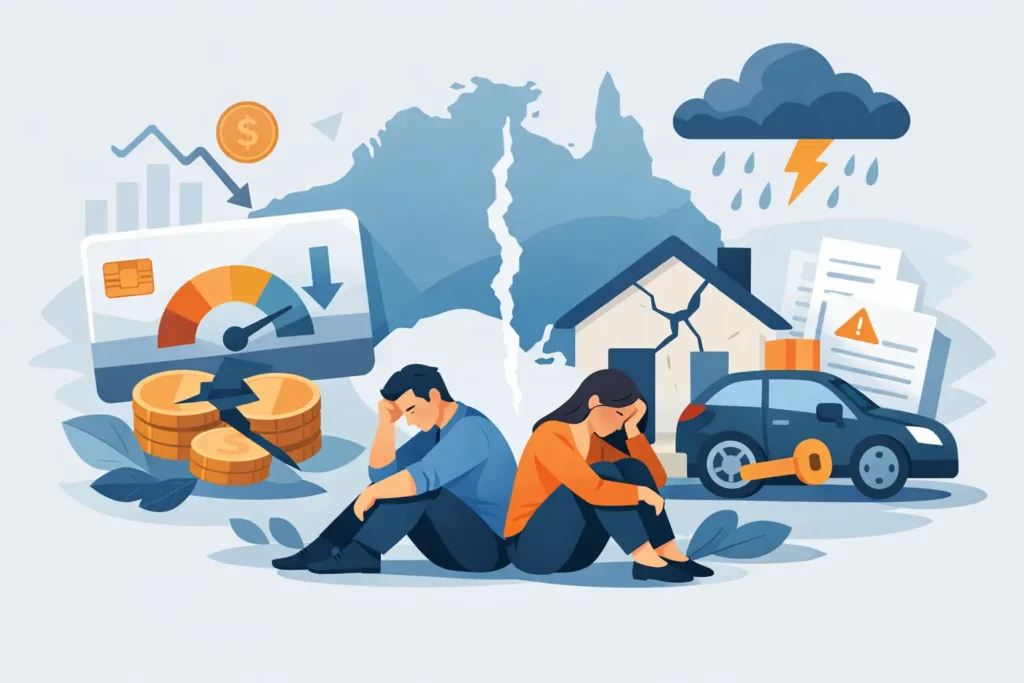
The call from your lender, the overdue notice on the bench, the worry about what happens next – financial hardship can make every decision feel loaded. So, does hardship affect credit? It can, but asking for help is often far better than falling behind without a plan. The impact depends on your repayment history, the arrangement you make, and how your lender reports it.
If money is tight because of illness, reduced work, a relationship breakdown, rising business costs or a mortgage repayment you can no longer carry, you do not need to handle the pressure in silence. Early action gives you more choices and can help protect the things that matter most.
Does financial hardship affect your credit report?
A financial hardship arrangement may appear on your credit report, but it is not the same thing as a missed repayment or a default. Since 2022, Australian credit reports can include financial hardship information when a lender agrees to vary your repayments because you are experiencing hardship.
This information generally shows that an arrangement was in place, rather than revealing the personal reason you needed help or the amount you owed. It may be recorded as a temporary arrangement, such as reduced payments for a set period, or a permanent variation to the loan.
Financial hardship information is typically kept on a credit report for 12 months after the arrangement ends. It is not generally used to calculate your credit score in the same way repayment history is. However, a future lender may see that an arrangement existed when assessing a new application. That does not automatically mean a declined application. Lenders look at the full picture, including your income, current debts, repayment conduct and the type of credit you are seeking.
The bigger risk is doing nothing. If repayments are missed before you reach an agreement, those late payments may be reflected in your repayment history. If an account remains overdue and required notices are issued, it can eventually lead to a default being recorded.
The difference between hardship, late payments and defaults
These terms get bundled together when you are stressed, but they have very different consequences.
A hardship arrangement is an agreed change to your usual repayment terms. It might involve a temporary payment reduction, a repayment pause, an interest-only period, a longer loan term or a formal restructure. If you meet the revised obligations, you are showing that you are working within an agreed plan.
Repayment history information records whether you made required repayments on time. For many credit products, late repayments can be shown on your credit report for up to 24 months. A hardship arrangement cannot erase late payments that were recorded before the agreement began. It can, however, stop matters getting worse if it puts an affordable arrangement in place.
A default is more serious. It generally occurs when a payment is overdue by at least 60 days and the creditor has followed the required notification process. A default can remain on your report for five years. It can make future borrowing harder and more expensive, particularly if you are applying for a home loan, car finance or business funding.
That is why timing matters. Speak with the lender while you can still make a proposal, not after months of missed calls and mounting arrears.
When a hardship arrangement can protect your position
Hardship support is not a loophole and it is not an admission that you have failed. It is a formal process designed for people whose circumstances have changed and who need a realistic path forward.
For a homeowner, a short-term arrangement may provide breathing room after a job loss or illness while income is stabilised. For a self-employed person, it may mean reshaping repayments after a major client leaves or seasonal cash flow drops. For someone juggling credit cards and personal loans, it may prevent one missed payment becoming several.
The trade-off is that you may pay more interest over the life of a loan if repayments are reduced or the term is extended. A repayment pause can also mean arrears, fees or interest continue to build, depending on the agreement. Never assume what the lender has offered is the only option, or that it will solve the wider debt problem.
Before accepting an arrangement, ask how it changes your repayment amount, loan term, interest, arrears and credit reporting. Get the answer in writing. If the arrangement is only affordable for a month or two, it is not a durable solution.
What to do before you miss another payment
Your first task is to get clear on the numbers, even if looking at them feels confronting. Write down every debt, the repayment due, the interest rate, arrears, security held over assets and any legal action or default notice. Then compare those obligations with the money actually coming in.
Next, take practical action:
- Contact each lender’s hardship team and explain that your circumstances have changed.
- Ask for a copy of your loan balance, arrears position and available hardship options.
- Make a realistic household or business budget based on essential costs, not optimistic projections.
- Do not agree to payments you cannot maintain simply to end a difficult phone call.
- Keep records of every conversation, email, offer and payment made.
For complex situations, one debt cannot be assessed in isolation. A reduced credit card payment may free up cash for the mortgage, but it may also leave you with a balance that grows for years. Selling an asset may reduce pressure, yet the timing and likely sale price matter. A business loan secured by a family home needs especially careful handling.
Your credit file is only one part of the decision
It is understandable to focus on your credit score. You may be thinking about refinancing, buying another property later or keeping finance available for your business. But trying to preserve a perfect-looking credit file while ignoring unaffordable repayments can create a much more damaging outcome.
Lenders considering future applications will also assess whether you can afford the new debt. A credit report with no hardship marker does not overcome high debt levels, mortgage arrears or an income that no longer supports repayments. On the other hand, a borrower who acted early, completed an arrangement and rebuilt stable payment behaviour may be in a stronger position than someone who allowed debts to default.
There is no single answer for every household. A temporary income setback may call for a short, carefully negotiated arrangement. Long-term unemployment, a permanent health condition, a failed business or multiple property loans in negative cash flow may require a broader debt-resolution strategy.
Check what has actually been reported
Do not guess what is on your credit report. Obtain a copy from a credit reporting body and review the accounts, repayment history, defaults and hardship information recorded. Check whether the details are accurate and whether an account that has been resolved is correctly shown.
If you find an error, raise it with the credit provider that supplied the information. Keep your request specific and provide supporting documents. A correction is not the same as removing accurate information, but you are entitled to challenge information that is wrong, incomplete or outdated.
It is also worth checking that your lender is recording repayments under the terms of any new agreement. If you have been told that a revised repayment will keep an account up to date, ask exactly how that will appear in your account records and credit reporting.
When you need someone in your corner
A lender’s hardship team can be helpful, but their role is still tied to that lender’s account. When you have several creditors, secured debts, property exposure, business liabilities or a threat of legal action, you may need a plan that considers the whole position.
Debt Australia helps Australians assess their debts, income, assets and immediate risks, then negotiate directly with lenders and creditors for a workable outcome. The aim is not to make promises that sound good for a week. It is to put forward a proposal you can genuinely sustain and to pursue stronger alternatives where bankruptcy is not the best path.
Will a hardship arrangement stop me getting a loan later?
Not necessarily. A future lender will make its own assessment. The arrangement may be relevant, particularly while it is recent, but stable income, manageable debts and consistent repayments after the arrangement can all improve your position over time.
Should I stop paying while I wait for hardship help?
Do not simply stop payments without speaking to the lender or getting advice. If you can make a partial payment without sacrificing essentials such as housing, food, utilities and medication, tell the lender what you can afford. The key is to communicate early and seek a formal agreement.
Can hardship help with a home loan?
Yes. Home loan hardship assistance can include temporary repayment changes or other options, but the right approach depends on arrears, equity, income prospects and whether the property is a home, investment or security for business debt. Get advice before agreeing to sell, surrendering a property or accepting terms you do not understand.
Debt stress can feel like a private failure, but hardship is a financial circumstance, not your identity. Take the next call, ask the direct questions and build a plan around what you can truly afford. A clear, early response can give you room to breathe and a genuine way forward.