
When repayments are swallowing your pay, the choice between consolidation versus settlement can feel urgent. You may be juggling credit cards, personal loans, tax debt, mortgage arrears or business lending, while calls and letters keep arriving. The right path is not simply the one with the lowest advertised repayment. It is the one that gives you a realistic way forward without making a difficult position worse.
Debt consolidation and debt settlement both aim to reduce financial pressure, but they work in very different ways. One restructures what you owe. The other may seek to resolve debt for less than the full balance. Knowing the difference can help you ask better questions before signing a new loan, selling an asset or agreeing to a creditor’s offer.
Consolidation versus settlement: the key difference
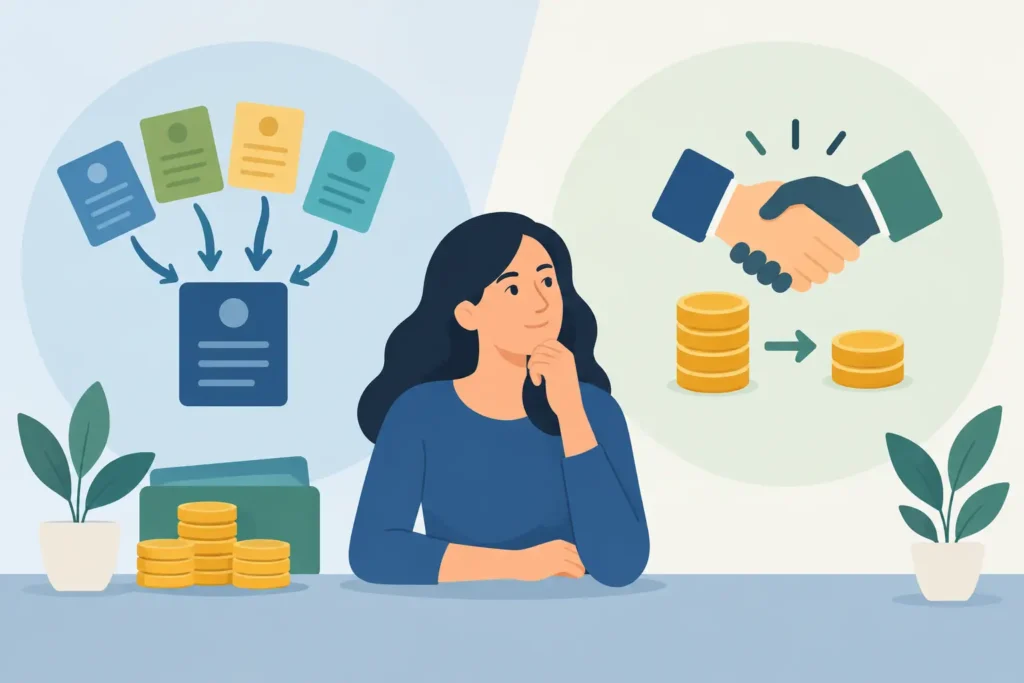
Debt consolidation means combining multiple debts into one new facility, usually with one repayment and one interest rate. This could involve a personal loan, refinancing a home loan, or using equity in a property to pay out credit cards and other unsecured debts. You still repay the full amount owed, plus the interest and fees attached to the new arrangement.
Debt settlement is a negotiated agreement with a creditor to accept less than the outstanding balance as final payment. It is often considered where someone cannot realistically repay the debt in full, but may have access to a lump sum through savings, the sale of an asset, family assistance or a refinance. Once the agreed amount is paid and the terms are met, the remaining balance is waived.
Neither option is automatically better. Consolidation can make sense if your income can support repayments and the new arrangement genuinely improves your position. Settlement may be more suitable when your debt level has become unmanageable and a full repayment is no longer realistic.
How debt consolidation works
A consolidation arrangement replaces several repayments with one. For example, someone paying three credit cards, a car loan and a personal loan may refinance them into a single loan with a lower interest rate or longer repayment period.
The immediate appeal is clear: fewer due dates, less administration and a more predictable budget. If the new interest rate is lower and you avoid adding fresh debt, consolidation can reduce the total cost over time. It may also stop the constant scramble of deciding which bill gets paid first.
But a lower repayment is not always a lower-cost solution. Extending a loan term can reduce the weekly or monthly amount while increasing the total interest paid. There may be application fees, discharge costs, break fees or other charges. A consolidation loan may also be secured against your home, turning unsecured credit card debt into debt that places property at risk if repayments cannot be maintained.
When consolidation may suit
Consolidation is generally worth considering when you have stable income, can meet the proposed repayments without relying on more credit, and have a clear plan to stop balances building up again. It can be useful for people whose debts are messy rather than impossible to repay.
It is less likely to help if you are already missing essential expenses, have no room in the household budget, or need to borrow more simply to get through each month. In those circumstances, moving debt around can delay the problem rather than solve it.
Before consolidating, look beyond the repayment figure. Ask how long the new loan runs for, what you will pay in total, whether any security is being added, and what happens if your circumstances change. A lender’s approval does not necessarily mean the loan is the best option for your family or business.
How debt settlement works
Debt settlement is usually built around a straightforward reality: the creditor may receive more through a negotiated lump-sum payment than through prolonged collection activity, especially where hardship is clear and there are limited assets or income available.
A settlement proposal should be based on your full financial position. That includes all debts, income, household expenses, assets, property security, business commitments and any urgent risks such as legal action or mortgage arrears. Offering money to one creditor without considering the rest of the picture can create new pressure elsewhere.
If a creditor agrees, get the terms in writing before money changes hands. The agreement should clearly state the settlement amount, payment deadline and that the payment resolves the account in full. Do not assume that a verbal promise or a payment marked as “settlement” will close the debt.
The benefits and trade-offs of settlement
A successful settlement can draw a line under an unaffordable debt sooner than years of minimum repayments. It may reduce the overall amount required to resolve the account and remove ongoing creditor pressure. For some people, that creates space to protect the household budget, keep trading, or focus on priority debts.
There are trade-offs. A creditor is not required to accept a reduced settlement, and negotiations can take time. You may need to build or access a lump sum. Settling for less than the full balance can affect your credit report, depending on how the account is reported and the circumstances involved. For business borrowers, there may also be accounting or tax considerations that need advice from an appropriately qualified professional.
Settlement is not a magic fix, and it should never be sold as one. The strongest outcome comes from a realistic proposal, clear evidence of hardship, and persistent negotiation with each creditor.
What about mortgage and property debt?
Mortgage debt needs particular care. If you are behind on a home loan or investment property loan, the first priority is often to engage with the lender early and understand every available option. A refinance or consolidation may be possible, but only if the repayment is sustainable and the security position makes sense.
In some cases, a property sale, negotiated payout, repayment arrangement or shortfall settlement may be considered. The right approach depends on property value, loan balances, other secured debts, income and whether keeping the property is genuinely affordable over the longer term.
Do not ignore default notices or assume a lender will not negotiate. Early action can preserve more choices. Waiting until legal costs, arrears and stress have compounded usually makes the path harder.
Questions to ask before choosing either option
Start with the figures, but do not stop there. What can you genuinely afford after rent or mortgage payments, food, utilities, transport, insurance and family costs? Is your income secure, seasonal or likely to change? Are you protecting an asset that is central to your family or business, or are you adding risk to it?
You should also ask whether the plan deals with every debt. Consolidating only some accounts may leave you with multiple repayments anyway. Settling one creditor may be unhelpful if another creditor can take action first. A good strategy puts the full picture on the table and ranks urgent risks before making promises.
If creditor calls are affecting your sleep, it can be hard to think clearly. That is not a personal failure. Financial hardship is often triggered by events people did not choose: illness, separation, reduced work, a business downturn, rising rates or a property sale that did not cover the loan.
Get a plan before making the next payment decision
The decision between consolidation and settlement deserves more than a quick online quote or a one-size-fits-all answer. It requires a careful review of what you owe, who holds security, what you can afford, and which action gives you the best chance of moving forward with dignity.
Debt Australia helps clients assess their position and negotiate directly with lenders and creditors as part of a practical debt-resolution strategy. As a regulated debt-management business operating under Australian Credit Licence #532513, the focus is on finding workable alternatives before debt pressure pushes you towards an outcome you do not want.
You do not have to carry the weight of debt on your own. Take a breath, gather the statements you have, and get clear advice before committing to a new loan or a settlement offer. A considered plan can turn a frightening situation into the next practical step.