
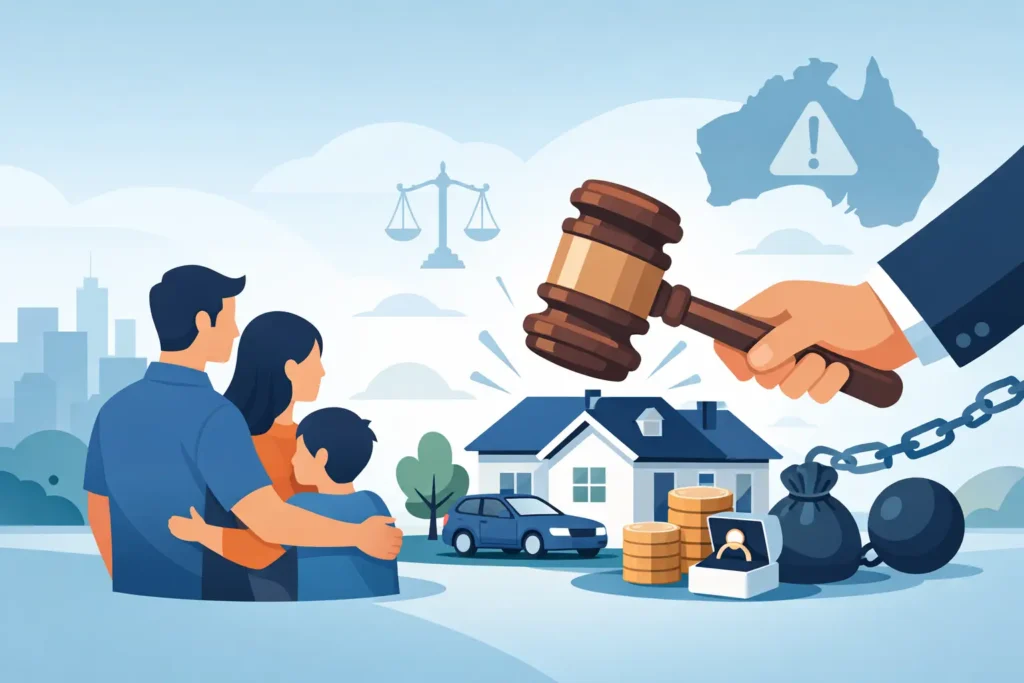
A threatening call, a default notice or an overdue mortgage can make the worst-case scenario feel immediate: can creditors seize family assets and leave your household with nothing? The short answer is no, not automatically. In Australia, what a creditor can recover depends on whose name the asset is in, whether the debt is secured, the court process, and the type of asset involved.
That distinction matters when you are trying to protect your home, your family’s financial security and your ability to keep earning. You do have options, but waiting for the pressure to build can narrow them quickly.
Can creditors seize family assets without a court order?
For most unsecured debts, such as credit cards, personal loans and unpaid invoices, a creditor cannot simply turn up and take your belongings because you missed payments. Debt collectors do not have automatic rights to enter your home, take a car from your driveway or sell assets that belong to your partner.
Before an unsecured creditor can enforce a debt against you, they will generally need to obtain a court judgment. The exact enforcement process differs between states and territories, but it may allow the creditor to seek options such as a garnishee order against wages or money held in a bank account, an examination of your financial position, or enforcement against property.
A court judgment is serious, but it is not the same thing as an instant loss of every family asset. Courts and creditors still need to follow formal processes. The amount owed, your income, available equity, other debts and the cost of enforcement all affect what a creditor may realistically pursue.
Secured debts are different. If a loan is secured by an asset, the lender has contractual rights over that security. A home loan is secured by the property. A car loan may be secured by the vehicle. If repayments fall behind, the lender may be able to repossess or sell the secured asset after following the required notice and legal process. That is why mortgage arrears or vehicle finance arrears need early attention, not hopeful silence.
Whose asset is it?
One of the biggest misconceptions is that a spouse’s or partner’s assets automatically become available for the other person’s debts. Usually, they do not.
If a credit card or business loan is only in your name, your partner is not generally liable simply because you are married or live together. Assets genuinely owned solely by your partner are not automatically yours for a creditor to take. A creditor cannot improve its position just because there is a family relationship.
The position changes where an asset or debt is joint. A jointly owned home, joint bank account or jointly guaranteed loan can expose both parties to risk. If both people signed the mortgage, personal guarantee or loan agreement, the creditor may pursue either borrower for the full debt, depending on the agreement.
Ownership on paper is not the only issue. Transferring a house, car or savings to a family member after debts have become unmanageable can create more problems, not fewer. A court or bankruptcy trustee may examine transactions that appear designed to put assets beyond creditors’ reach. Transfers for less than market value, or transfers made while insolvent, may be challenged and potentially reversed.
If you are considering changing ownership of an asset, get tailored legal and financial advice first. A quick fix can become an expensive mistake.
The family home
A family home is often the asset people fear losing most. If it has a mortgage, the bank’s security interest comes first. Falling behind does not mean the bank wants to sell your home – lenders will often consider hardship arrangements, temporary reduced repayments, payment deferrals or a managed sale – but the risk becomes real if no workable arrangement is reached.
An unsecured judgment creditor may also seek enforcement against real property in some circumstances. Whether this is worthwhile depends heavily on the equity in the home after the mortgage, selling costs and any other registered interests are accounted for. The fact that children live in the property does not make it completely untouchable, although it can be relevant in broader legal circumstances.
If bankruptcy becomes a possibility, the family home and its equity require particularly careful advice. Bankruptcy can put a bankrupt person’s interest in property at risk, even where a spouse or family member lives there. There may be alternatives worth exploring before making a decision that affects the roof over your family’s head.
Cars, household goods and tools of trade
Creditors are not usually interested in ordinary household furniture, clothes or everyday appliances. Under bankruptcy law, certain household property is generally protected, along with some personal items and tools needed to earn an income. Limits and conditions can apply, and dollar thresholds are indexed over time.
A vehicle may be protected up to a prescribed value in bankruptcy, but there are exceptions and the rules are not the same for every debt situation. If the car is under finance, the lender’s security interest will usually take priority. For a self-employed tradie, contractor or small business owner, the treatment of work vehicles, tools and equipment can be especially important.
Do not assume an item is safe or at risk based on what you have heard from a mate or read online. The value, ownership structure, finance arrangement and type of enforcement all matter.
Superannuation, trusts and business assets
Superannuation is generally protected in bankruptcy, but there are important exceptions, including improper transfers into super to defeat creditors. It is not a last-minute shelter for money that should have been available to pay debts.
Trusts and companies can also be complicated. A company is a separate legal entity, but directors who gave personal guarantees may still be personally exposed. A family trust may hold assets separately, yet a person’s control of, benefits from or transactions with the trust can be closely examined. These structures need proper advice, particularly where tax debts, business loans, property development finance or personal guarantees are involved.
What to do when creditor pressure starts
The best time to act is before a court judgment, repossession notice or forced sale is on the table. Ignoring letters because you feel ashamed or overwhelmed is understandable, but it lets the creditor control the timetable.
Start by gathering a clear picture of every debt, security, overdue amount, asset and household expense. Separate debts in your name from joint debts, and identify any guarantees you have signed. Keep copies of default notices, statements, court documents and lender emails. If you receive legal documents, do not miss the response deadline.
Then look at the real choices. Depending on your situation, that may mean applying for financial hardship assistance, negotiating reduced repayments, pausing enforcement while a proposal is assessed, refinancing, selling an asset in a controlled way, negotiating a settlement, or considering a formal insolvency option. There is no one-size-fits-all answer. Keeping a property at all costs can sometimes make financial damage worse, while selling it on your terms may preserve more equity and choice.
A negotiated solution is often more achievable when your financial position is properly prepared and presented. Creditors respond to evidence: income, living costs, property values, loan balances, business cash flow and a proposal they can assess. Broad promises to “catch up soon” rarely carry the same weight as a realistic plan.
Debt Australia helps Australians facing serious creditor pressure assess their full position and negotiate practical debt-resolution pathways with lenders and creditors. The focus is on giving you a clear strategy before decisions are made for you.
A calmer next step
You do not need to hand over the family home, drain savings or move assets around in panic simply because a creditor is demanding payment. Take the notices seriously, protect your position with accurate advice, and get a plan in place while there is still room to negotiate. A hard debt situation can feel isolating, but you do not have to carry the weight of it on your own.